Business Process Analysis

Step 1
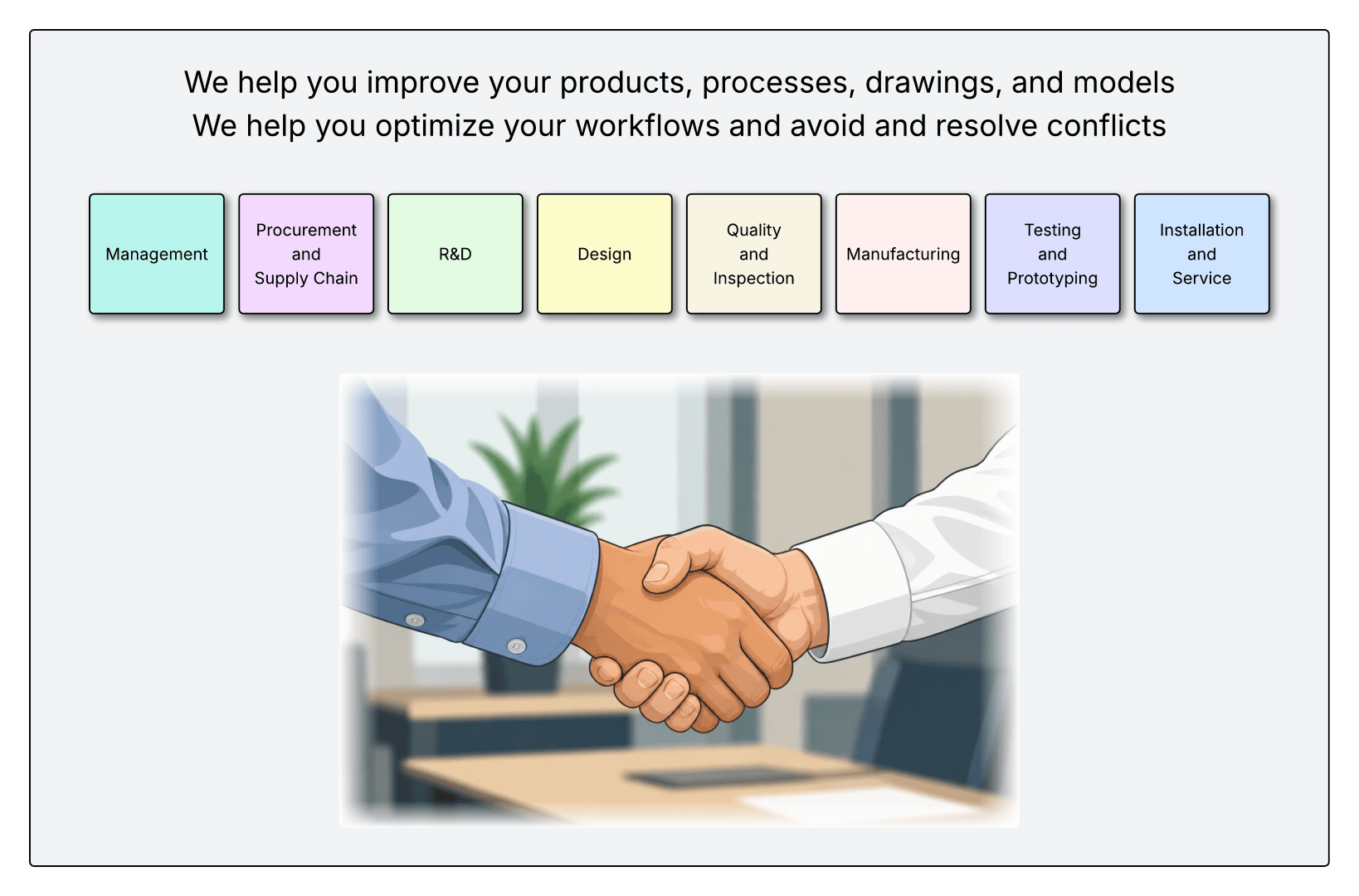
We evaluate the current state of your design practices (design, drawings and models), manufacturing, inspection, assembly, quality, manufacturing, inspection and other processes, your tools, systems, software, and platforms, and your company culture.
Step 2
We help you and your staff understand opportunities to improve methods, eliminate outdated and unnecessary steps and information, to streamline your business, and reduce conflicts with clients and suppliers.
Step 3
We train your staff to understand what’s possible, where inertia inherited from the past are interfering with productivity and improving your workflows. We call this rebaselining. It’s a critical step that all companies need, as people become so burdened by operating in a chaotic environment that they end up completely focused on putting out routine fires that should not be happening in the first place.
Step 4
We help you plan and map your future state, how to get there, and what the success criteria are.
Steps 5, 6
We can help you on your journey toward greater productivity, quality, and profitability. Whether it’s an advisory role or more hands-on, we can help. We want you to succeed.
Request Consultation

Overview

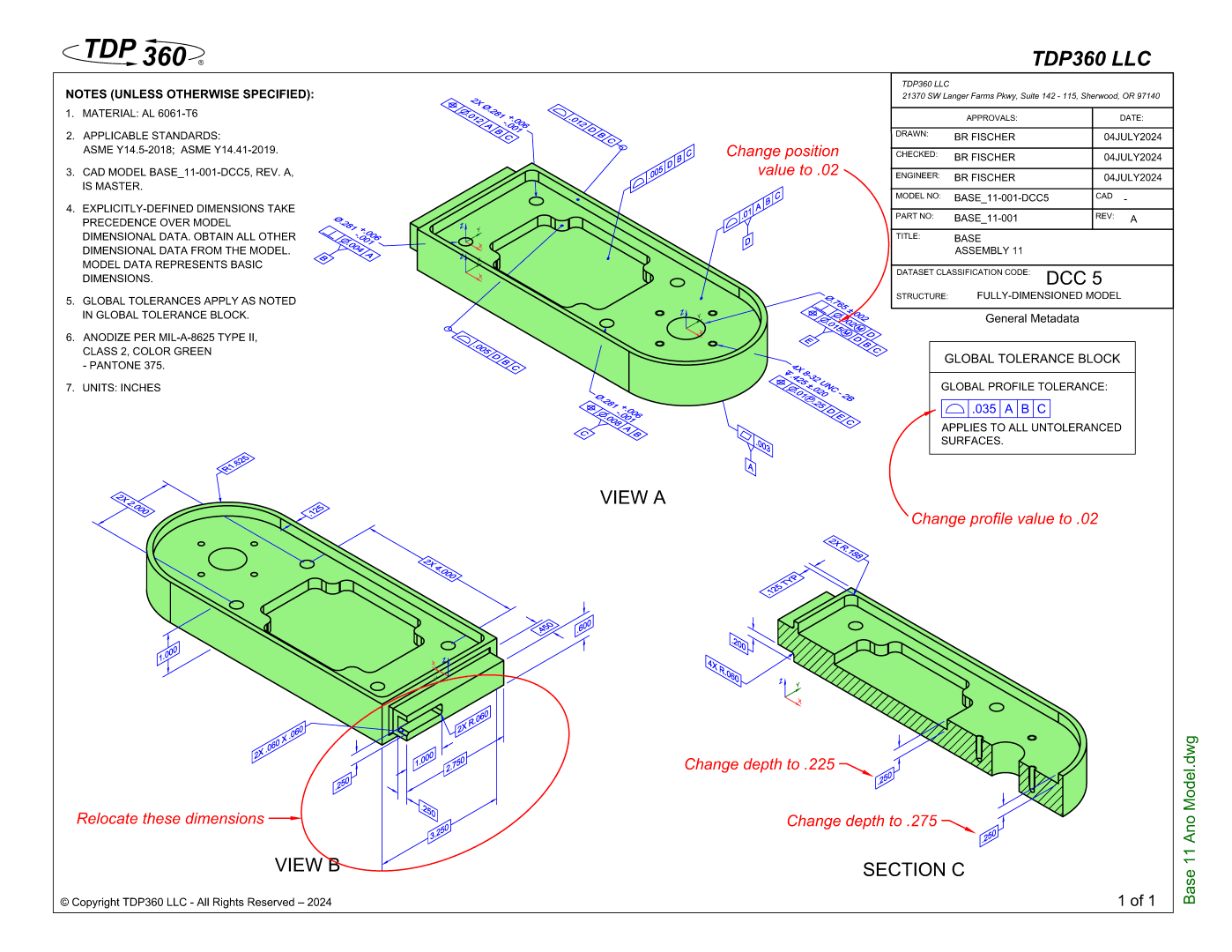
Business Process Analysis focuses on understanding how product definition practices are currently applied across your organization and identifying opportunities for improvement. This includes evaluating workflows related to GD&T, ISO GPS, Model-Based Definition (MBD), Model-Based Enterprise (MBE), and supporting processes.

The goal is to improve efficiency, reduce friction, and ensure that processes are aligned across engineering, manufacturing, and supply chain teams. This helps organizations move from inconsistent or fragmented approaches to more structured and scalable systems.

This work is grounded in real-world experience and focuses on practical improvements that can be implemented within your existing environment.

When to Engage

Business Process Analysis is valuable when organizations are looking to improve how work gets done across teams and systems.

  • Processes are inconsistent or unclear
  • Workflows vary between teams or locations
  • Challenges with implementing GD&T, ISO GPS, MBD, or MBE
  • Inefficiencies impacting productivity or quality
  • Difficulty aligning engineering, manufacturing, and supply chain processes
  • Need for more scalable and repeatable systems

What’s Included

01

Review and evaluation of current engineering and product definition workflows.

02

Identification of gaps, inefficiencies, and areas of inconsistency.

03

Assessment of how standards and practices are applied across teams and systems.

04

Recommendations for improving structure, alignment, and overall effectiveness.

Outcomes

  • Improved clarity and consistency in processes
  • More efficient and repeatable workflows
  • Better alignment across teams and disciplines
  • Reduced inefficiencies and process-related issues
  • A clearer path toward scalable and effective systems

Improve How Your Organization Works

Identify inefficiencies, align your processes, and build a more effective approach to product definition.